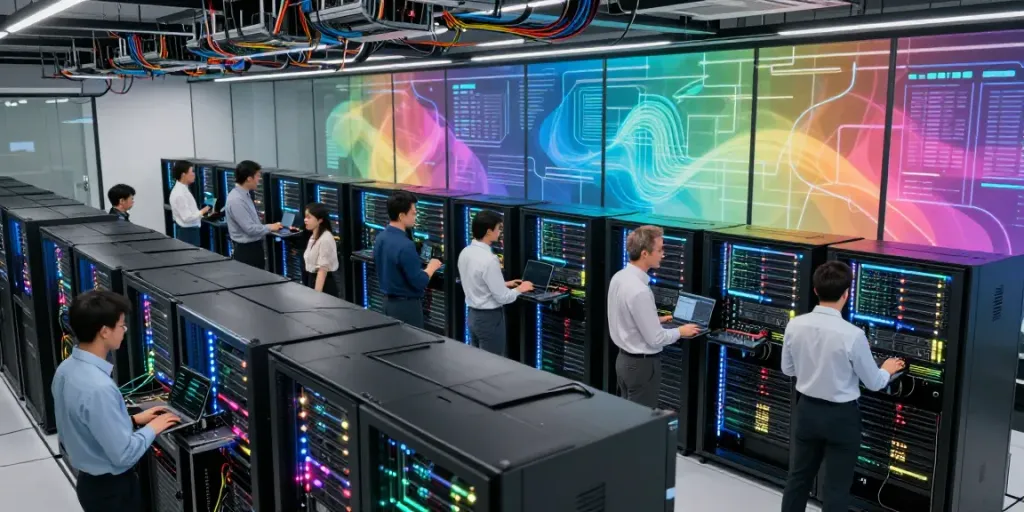
Understanding GPU Computing Basics
In today's fast-paced technological landscape, GPU computing has emerged as a cornerstone of modern computing, particularly in fields such as artificial intelligence (AI) and machine learning. Utilizing the parallel processing capabilities of Graphics Processing Units (GPUs), this approach accelerates computational tasks that were once the exclusive domain of traditional Central Processing Units (CPUs). The importance of GPU computing cannot be overstated, as it enables the processing of large datasets and complex algorithms at unprecedented speeds, unlocking new possibilities for innovation and efficiency.
What is GPU Computing?
GPU computing refers to the use of a graphics processing unit to perform computations traditionally handled by the CPU. Originally designed for rendering graphics, GPUs have evolved to support general-purpose computing tasks through a parallel processing architecture. This allows multiple operations to occur simultaneously, making GPUs particularly well-suited for tasks that require high throughput, such as scientific simulations, financial modeling, and, importantly, AI workloads.
The Role of GPUs in AI Infrastructure
GPUs have become essential in AI infrastructure, powering everything from neural network training to real-time inference. Their ability to process vast amounts of data in parallel means they can significantly accelerate deep learning tasks, which often involve complex calculations across large datasets. In AI systems, GPUs are utilized to handle the heavy lifting of matrix multiplications and tensor operations, which are crucial for training models effectively.
Key Differences Between GPU and CPU Computing
- Architecture: CPUs are optimized for sequential processing, making them ideal for tasks that require quick execution of individual instructions. In contrast, GPUs are designed for parallel processing with thousands of cores, which enables them to handle multiple threads simultaneously.
- Performance: For workloads involving heavy mathematical computations, such as AI training and data analysis, GPUs outperform CPUs significantly, often providing a speedup of several times for these specific tasks.
- Energy Efficiency: GPUs tend to offer better performance per watt compared to CPUs, making them a cost-effective choice for data centers and computational tasks that require large amounts of energy.
Benefits of Implementing GPU Computing in AI
The integration of GPU computing into AI workflows comes with a range of benefits that enhance both performance and cost-effectiveness. Understanding these advantages can help businesses make informed decisions about their computational strategies.
Speed and Efficiency in Processing
One of the most significant benefits of GPU computing is the substantial increase in processing speed. By leveraging the parallel architecture of GPUs, tasks that would take hours or even days using a CPU can often be completed in minutes. This speed not only accelerates project timelines but also facilitates rapid prototyping and experimentation, crucial elements in the fast-paced AI landscape.
Scalability for Large-Scale AI Models
As AI models grow in complexity and size, the demand for computational resources increases. GPU computing offers scalability, allowing organizations to add more GPU resources as needed to handle larger datasets or more extensive models without the overhead of traditional computing architectures.
Cost-Effectiveness of GPU Resources
Implementing GPU computing can lead to significant cost savings over time. While the initial investment in GPU hardware may be higher than that of CPUs, the increased efficiency and reduced processing times result in lower total operating costs. Organizations can achieve better returns on investment as their AI initiatives become more productive and efficient.
Choosing the Right GPU for Your Needs
Selecting the right GPU for your applications is crucial to maximizing performance and efficiency. Here are several factors to consider when making this important decision.
Factors to Consider: Performance, Cost, and Compatibility
When evaluating GPUs, performance metrics such as processing power (measured in TFLOPS), memory bandwidth, and the number of CUDA cores are vital. Additionally, organizations should weigh the cost of the GPU against its performance capabilities to ensure they are making a financially sound decision. Compatibility with existing systems and software stack is also essential to avoid integration issues that could hinder productivity.
Top GPUs for AI and Machine Learning in 2026
As of 2026, several GPU models have gained recognition for their performance in AI and machine learning applications:
- NVIDIA A100: Designed for high-performance computing and AI workloads, offering exceptional memory and processing speed.
- AMD Radeon Instinct MI100: Known for its efficiency in deep learning tasks and competitive pricing.
- Google TPU: Specialized for tensor computations, ideal for specific AI applications and environments.
Understanding GPU Specifications and Their Impact
Grasping the specifications of GPUs is critical for selecting the right model. Key specifications include:
- Memory Size: A larger memory size allows for the handling of more extensive datasets and complex models.
- Memory Bandwidth: This impacts how quickly data can be moved to and from the GPU, affecting performance during high-demand tasks.
- Power Consumption: Understanding the power requirements aids in planning and budgeting for operational costs.
Best Practices for Optimizing GPU Computing
Once the right GPU has been selected and implemented, optimizing its performance will ensure that you derive maximum value from your investment. Here are best practices to consider.
Techniques for Effective Load Balancing
Load balancing across multiple GPUs can help achieve better utilization rates and faster processing times. Techniques such as task queuing, dynamic allocation of workloads, and using frameworks designed for parallel processing can help maximize efficiency.
Maintaining Optimal Thermal Conditions
Thermal management is critical for GPUs, as overheating can lead to throttled performance and potential hardware damage. Implementing adequate cooling solutions, monitoring temperatures, and ensuring that airflow is optimal can prolong the life of the hardware and maintain performance.
Leveraging Parallel Processing for AI Workloads
Maximizing the use of parallel processing within GPU architectures can significantly enhance the speed of AI workloads. Utilizing libraries and frameworks like TensorFlow or PyTorch that support GPU acceleration will help leverage the full potential of your hardware.
Future Trends in GPU Computing
The landscape of GPU computing is constantly evolving, with emerging technologies and methodologies that promise to further enhance performance and efficiency in AI applications.
Emerging Technologies and Their Implications
New advancements in GPU architecture, such as the introduction of multi-chip modules and sophisticated memory technologies, are set to revolutionize how GPUs are utilized in AI. These innovations will drive the development of even larger AI models and more complex computations.
The Evolving Role of AI in GPU Computing
As AI algorithms become more sophisticated, the role of GPUs will continue to expand. We may see GPUs specifically designed for AI tasks that optimize both performance and energy efficiency, tailoring hardware solutions to the specific needs of modern AI frameworks.
Predictions for GPU Advancements in 2026 and Beyond
Looking ahead, industry experts predict that by 2026, GPU computing will see significant advancements in areas such as:
- Integration with Quantum Computing: Exploring hybrid CPU-GPU-quantum systems to tackle previously insurmountable computational challenges.
- Improved AI Optimization: More specialized GPUs designed for training and inference of AI models.
- Sustainable Computing: Increased focus on energy-efficient designs and renewable energy sources for powering GPU infrastructures.
Frequently Asked Questions
What is the importance of GPU in computing?
GPUs are vital in modern computing as they provide the parallel processing power needed for high-performance computing tasks, particularly in AI, scientific simulations, and data analysis.
How does GPU computing affect AI performance?
GPU computing dramatically enhances AI performance by allowing for faster data processing and handling of complex calculations, essential for training sophisticated AI models.
What GPUs are best for AI tasks?
As mentioned earlier, leading GPUs like the NVIDIA A100 and AMD Radeon Instinct MI100 are currently among the best options for AI tasks due to their exceptional capabilities.
How can I improve my GPU's efficiency?
To improve GPU efficiency, ensure proper thermal management, optimize load balancing, and leverage parallel processing capabilities effectively.
What future trends should I watch in GPU technology?
Key trends include the integration of quantum computing with GPUs, advancements in AI-specific hardware, and a push towards sustainable computing practices.